
Frugalpac terms and conditions for the purchase of goods

China Top Spirits Wine Suppliers for Global Buyers?

China’s spirits wine sector is gaining attention from importers seeking reliable products, flexible packaging, and competitive production capacity. Yet a supplier list alone cannot guarantee quality, consistency, or lawful international trade. Buyers need evidence behind every claim.

Robert Mondavi, a respected American wine producer, once said, “Wine to me is passion. It’s family and friends. It’s warmth of heart and generosity of spirit.” His words still matter when evaluating Chinese suppliers. A serious producer should understand both the product and the people who will drink it.

This guide examines China’s leading spirits wine suppliers through practical buyer criteria. These include factory experience, product categories, ingredient transparency, laboratory testing, traceability, and export documentation. A trustworthy supplier should explain its production process clearly. It should also provide batch records, certificates, packaging specifications, and realistic minimum order quantities.

Look closely at the details. Can the company print a stable lot number on each bottle? Does the sample match the final bulk order? Are cartons strong enough for long-distance transport? Can the supplier support compliant labels for the destination market?

The lowest price is rarely the safest choice.

Some supplier information may be incomplete, outdated, or overly promotional. That deserves reflection. A polished website does not prove manufacturing capability. Factory videos can also show only selected areas. Buyers should request samples, verify business credentials, review independent test results, and communicate directly with production staff.

This introduction offers a balanced starting point for global buyers. It highlights opportunity, but it does not ignore uncertainty. In spirits wine sourcing, trust must be demonstrated, documented, and tested over time.
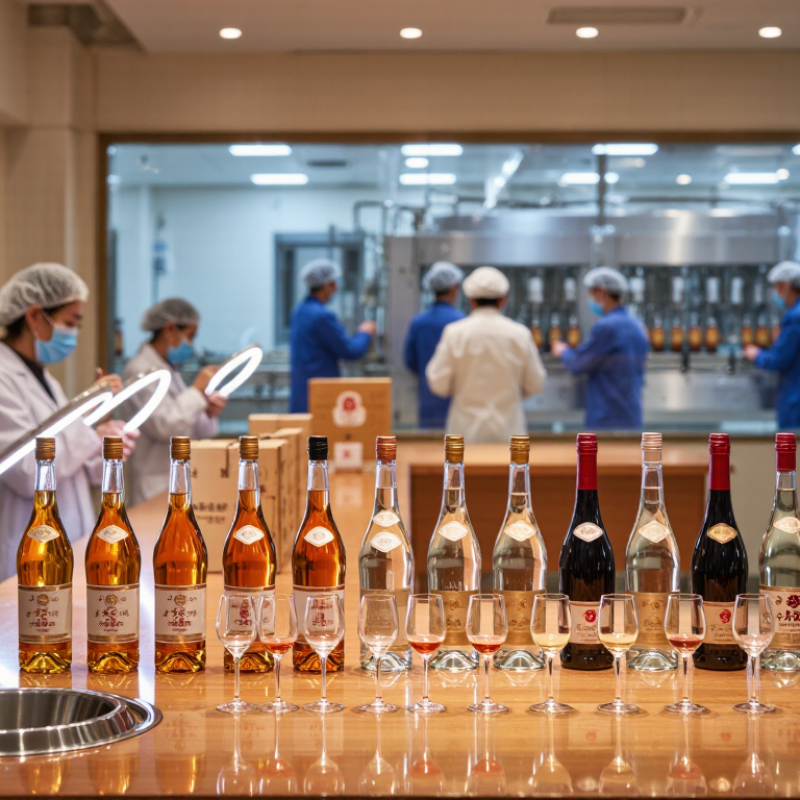
China Top Spirits Wine Suppliers for Global Buyers?

China’s Spirits and Wine Industry: An Overview

China’s spirits and wine industry is moving through a complicated adjustment. The OIV’s State of the World Vine and Wine Sector 2024 report estimated China’s 2023 wine production at 6.51 million hectolitres, down sharply year on year. Weather, weaker demand, and inventory pressure affected vineyards and distributors.

The market is not shrinking evenly. China’s Alcoholic Drinks Association reported continued structural growth in premium spirits, while mass-market products faced stronger price competition. IWSR also identified China as a major beverage alcohol market, although recent volume performance has been uneven. For global buyers, this creates opportunities beyond large coastal hubs. Sichuan and Guizhou are known for grain-spirit production, while Ningxia, Xinjiang, and Hebei support expanding wine regions.

Sourcing requires more than a product catalogue. Experienced buyers should inspect fermentation rooms, storage tanks, bottling lines, and export documentation. Batch records matter. So does the temperature during transport. China Customs data showed imported wine volume remained substantial in 2023, yet changing demand made forecasting difficult. Suppliers with laboratory testing, traceable ingredients, stable packaging, and clear alcohol-content declarations are easier to evaluate.

The picture is still imperfect. Regional data can be inconsistent, and some market reports use different definitions. Buyers should request recent production figures, independent quality reports, and small trial shipments before committing to large orders. Clear communication remains essential. +#+

Major Product Categories Offered by Chinese Suppliers

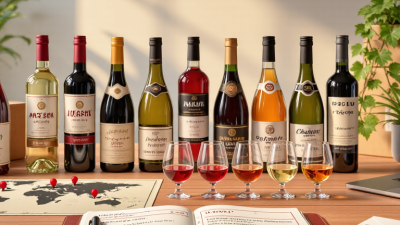
China’s spirits and wine suppliers offer a broad category mix for global buyers. Baijiu remains central, with strong regional differences in aroma, grain selection, and aging methods. Huangjiu and rice wine provide lower-alcohol options with distinctive fermented profiles. Suppliers also produce grape wine, fruit wine, herbal liqueurs, and grain-based distilled spirits.

The International Organisation of Vine and Wine reported global wine consumption at about 214 million hectolitres in 2023. This supports continued demand for flexible sourcing, although China’s wine category faces uneven consumer recovery. IWSR industry analysis also identifies China as a major global beverage alcohol market, especially for spirits and ready-to-drink products. Export buyers should request category-specific samples. A 50-millilitre sample can reveal sweetness, aroma intensity, color stability, and sediment more clearly than a product sheet.

Packaging options commonly include glass bottles, ceramic vessels, bag-in-box formats, and bulk containers. Suppliers may provide private-label filling, custom cartons, bilingual labels, and mixed-container loading. Buyers should verify alcohol percentage, ingredient declarations, lot coding, laboratory results, and food-safety documentation before negotiation. Traceability matters.

Not every catalog is equally reliable. Some product descriptions feel polished but lack measurable aging records or harvest details. That weakness deserves attention. The China Alcoholic Drinks Association has repeatedly emphasized quality control and standardized production across the sector. Experienced buyers should therefore compare three samples, inspect factory records, and confirm independent testing before placing a large order.

China Top Spirits Wine Suppliers for Global Buyers? - Major Product Categories Offered by Chinese Suppliers

Product Category Representative Product Types Primary Ingredients Typical ABV Common Packaging Formats Typical Global-Buyer Applications Key Specification Points
Chinese Baijiu Grain-based distilled spirit; light-, strong-, sauce- and rice-aroma styles Sorghum, rice, wheat, corn or mixed grains 38–68% Glass bottles, ceramic bottles, gift boxes, bulk food-grade containers Chinese restaurants, specialty retail, gifting and cocktail programs Aroma style, grain composition, distillation method, aging statement, ABV and additives
Chinese Huangjiu Dry, semi-dry, semi-sweet and sweet yellow rice wine Glutinous rice, rice, wheat and water 8–20% Glass bottles, ceramic jars, cans and food-service containers Asian cuisine, cooking applications, foodservice and specialty beverage retail Residual sugar, fermentation type, acidity, pasteurization, serving style and shelf life
Rice Wine and Fermented Rice Beverages Sweet fermented rice drinks, filtered rice wine and culinary rice wine Rice, water, yeast and fermentation starters Low to 18% Cans, PET bottles, glass bottles and food-service packs Retail beverages, Asian cooking, sauces and marinade production Alcohol level, sweetness, salt content for culinary products, preservatives and storage conditions
Chinese Grape Wine Red, white, rosé, sparkling and fortified grape wine Fresh grapes or grape must 8–15%
(fortified styles may be higher)
Glass bottles, bag-in-box, cans and bulk flexitanks Retail, hospitality, private-label programs and foodservice Grape variety, vintage, residual sugar, sulfites, acidity, closure type and storage temperature
Fruit Wine and Fruit-Based Alcoholic Drinks Plum, peach, lychee, berry, hawthorn and other fruit wines Fruit juice, fruit puree or fruit extracts with fermented alcohol 5–18% Glass bottles, cans, pouches and bag-in-box formats Ready-to-drink beverages, gifting, restaurants and private-label retail Fruit content, sugar level, acidity, colorants, preservatives and allergen declaration
Chinese Craft and Lager Beer Pale lager, wheat beer, dark beer, craft ale and low-alcohol beer Malted barley, wheat, hops, yeast and water 2.5–6.5% Cans, glass bottles, kegs and multipacks Bars, restaurants, supermarkets, events and hospitality supply Original gravity, bitterness, ABV, pasteurization, can or bottle dimensions and cold-chain needs
Chinese Grain-Based Vodka and Neutral Spirits Neutral grain spirit, vodka-style spirit and rectified alcohol Sorghum, wheat, corn, rice, molasses or other approved starch or sugar sources 37.5–96% Glass bottles, metal drums, IBC tanks and bulk tank containers Beverage manufacturing, liqueur production, food processing and industrial applications Purity, methanol and congener limits, denaturants, certificate of analysis and transport classification
Chinese Liqueurs and Ready-to-Drink Cocktails Herbal liqueur, fruit liqueur, cream-style liqueur and canned cocktails Base spirit, fruit, herbs, spices, sugar, flavorings and water 5–35% Glass bottles, slim cans, standard cans and multipacks Convenience retail, nightlife, gifting, e-commerce and cocktail service ABV, sugar content, flavor profile, carbonation, emulsion stability, shelf life and permitted additives

Note: Alcohol-by-volume ranges are indicative category ranges for market comparison. Actual specifications depend on the product formula, production method, applicable regulations and destination-market requirements.

Key Regions and Production Centers in China

China’s spirits and wine supply base is concentrated in distinct production centers. Sichuan and Guizhou remain important spirits regions, supported by humid climates, local grains, and long fermentation traditions. Shanxi, Anhui, and Jiangsu add further capacity, although their production methods differ considerably. Buyers should inspect fermentation rooms, storage conditions, and batch records instead of judging suppliers by location alone.

Wine production follows another geography. Ningxia’s Helan Mountain area benefits from dry weather, strong sunlight, and large temperature differences between day and night. Xinjiang, Shandong, Hebei, and Gansu also contribute vineyards and processing facilities. The International Organisation of Vine and Wine estimated China’s 2023 wine production at approximately 6.5 million hectolitres. That figure shows scale, but it does not prove consistent quality. Regional variation remains significant.

Official industry statistics also indicate China’s distilled-spirit output is measured in millions of kilolitres annually, confirming a deep manufacturing base. Yet production volume can hide important weaknesses. Some smaller facilities still need stronger export documentation, laboratory testing, and temperature-controlled storage. Global buyers should verify certificates, ingredient specifications, traceability systems, and container-loading practices. A factory visit helps. So does an independent inspection. The best sourcing decision may not come from the largest center, because fit, transparency, and repeatable quality matter more than impressive output.

How Global Buyers Can Evaluate Chinese Suppliers

China remains the world’s largest spirits market by volume, according to IWSR Drinks Market Analysis 2024. For global buyers, scale alone proves little. Evaluate each supplier through documented evidence, not attractive catalogs. Request business licenses, production permits, HACCP or ISO 22000 records, and recent third-party laboratory reports. Check whether the factory address matches official documents. Small inconsistencies deserve attention.

Product consistency is equally important. Ask for batch specifications covering alcohol strength, allergens, additives, packaging materials, and shelf life. Request three samples from different production batches. Compare aroma, color, fill level, closures, and label accuracy. A certificate of analysis should identify the batch number and testing date. Generic documents are weak evidence. Traceability matters.

IWSR also reports continuing premiumization in China’s beverage alcohol sector, making quality control more important for international positioning. Yet premium packaging cannot replace reliable operations. Review monthly capacity, peak-season lead times, export experience, carton drop tests, and container loading photographs. Use independent inspections before shipment. Confirm Incoterms, payment milestones, insurance, and recall procedures in writing. The wrong supplier may still pass a polished video call. That is the uncomfortable part. A careful audit can feel slow, but one overlooked seal or missing record can damage an entire shipment. Supplier evaluation should remain evidence-based, repeatable, and open to revision.

How Global Buyers Can Evaluate Chinese Spirits Suppliers

Recommended buyer-side weighting for supplier due diligence. The framework focuses on measurable evidence rather than company or brand reputation.

Compliance and product safety should receive the highest priority because exporters must meet destination-market rules, labeling requirements, customs documentation, and applicable food-safety standards. Buyers should request current certificates, laboratory reports, traceability records, production details, and verified export experience before placing an order.

Export Standards, Trade Terms, and Buyer Considerations

Reliable sourcing starts with documents, not attractive tasting notes. Export-ready suppliers should provide product specifications, certificates of analysis, and clear batch records. These records should show alcohol content, ingredients, allergens, production dates, and shelf-life guidance. Labels may need local language, volume statements, warnings, and importer information. Ask for recent laboratory reports, not recycled files. Glass bottles also require strong cartons, dividers, and tested pallet wrapping.

Trade terms can change the real purchase cost. Under FOB, the buyer manages ocean freight and later charges. CIF includes freight and insurance to the named port, but destination fees remain possible. FCA may suit buyers using their own forwarder. DDP appears simple, yet tax and customs responsibilities must be confirmed carefully. Duties, excise taxes, port storage, and inspection fees can exceed early estimates. Write every responsibility into the sales contract.

A dependable supplier should explain minimum order quantities, lead times, payment stages, and replacement rules for breakage. Request samples from the intended production batch. Factory photographs help, but an independent audit offers stronger evidence. Verify business licenses and export experience through official records where available. Communication quality matters too. Slow answers often become costly delays. I have seen complete-looking quotations hide missing insurance details. That is a useful warning, though not proof of poor quality. Leave room for seasonal production changes, because promised dates can move. Never approve a shipment until documents, packaging samples, and final pricing match the contract.

Close