

Choosing Cookie Boxes for global shipping in 2026 requires more than attractive printing. The right package must protect delicate cookies through sorting centers, long flights, changing temperatures, and repeated handling. A box that looks sturdy on a warehouse shelf may still collapse inside a damp delivery van. That difference matters.
Start with the cookie itself. Soft cookies need moisture control, while crisp varieties need protection from crushing. Consider food-safe liners, internal dividers, tamper-evident seals, and enough cushioning for empty spaces. Corrugated paperboard can provide strong protection without excessive weight. Lower shipping weight often reduces costs and environmental impact. Still, lighter packaging is not automatically better. I have seen beautiful Cookie Boxes fail because their corners softened after exposure to humidity.
Destination conditions also deserve careful attention. Packaging suppliers should provide material specifications, test results, and clear information about food-contact suitability. Export teams should review current carrier requirements and destination packaging rules before production. Requirements can vary between markets and may change during the year. Do not rely on an old supplier statement.
Test before scaling.
Place filled boxes in a vibration test, a compression test, and a realistic temperature cycle. Photograph the cookies afterward. Check broken edges, shifted inserts, loose labels, and seal damage. This process may reveal uncomfortable weaknesses. That is useful. No packaging design is perfect, but practical testing makes its limits visible. The best choice balances protection, presentation, cost, sustainability, and reliable performance across the entire shipping journey.
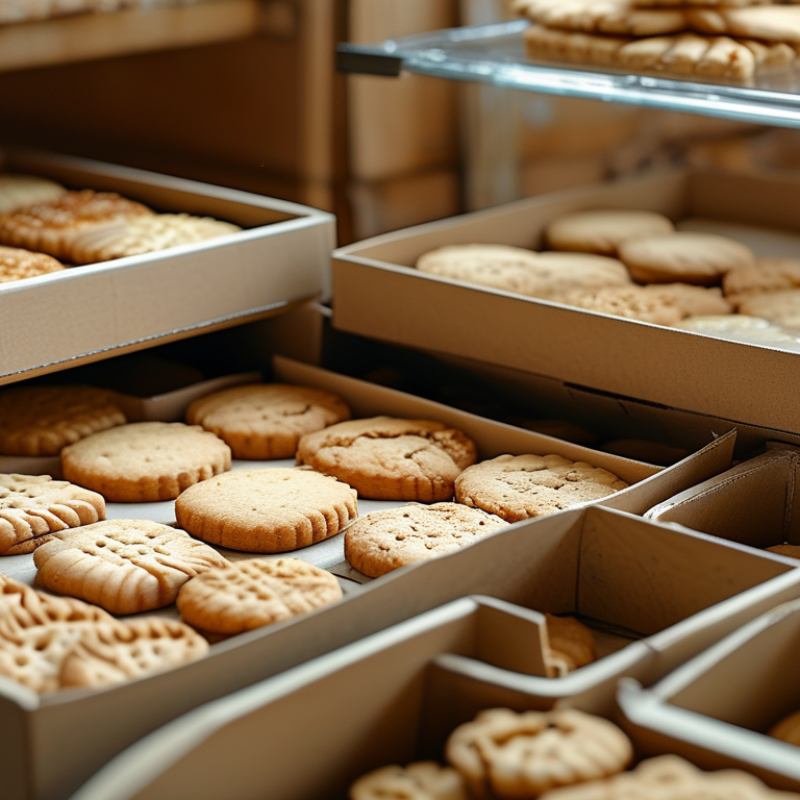
How to Choose Cookie Boxes for Global Shipping in 2026?
Define Shipping Requirements for International Cookie Delivery
International cookie delivery starts with the route, not the box design. Identify the destination, transit time, climate, handling conditions, and delivery method. A two-day air shipment needs different protection from a three-week mixed transport route. Confirm whether the package may face rain, freezing temperatures, heat, or repeated handling.
Choose a rigid food-safe box with enough space for cushioning, but avoid excessive movement. Cookies should sit firmly without pressing against the lid. Moisture-resistant inner wrapping helps protect texture during humid journeys. For delicate designs, separate layers with food-safe dividers. For brittle cookies, test drop resistance from several angles. Small details matter.
Tips: Measure the packed box, not the empty one. Record its weight, dimensions, and seal strength. Use temperature and humidity tests when shipping across seasons. Add clear product information and destination-required details, while checking current import requirements before dispatch. Do not assume one package works everywhere. A box that performs well in dry weather may fail after exposure to condensation. I once considered thicker cardboard the safest choice, but excessive rigidity increased shipping weight and cost. The better answer was a balanced structure with internal cushioning. Test before scaling.
Define the box requirements around the longest realistic transit window, customs delays, moisture exposure, and the need to prevent cookie movement.
Choose a rigid corrugated outer box and size the cookie box to limit empty space during handling.
Use a sealed inner bag or liner, especially when the shipment may cross humid climates or face temperature changes.
Select packaging that protects texture and appearance for the full planning range, including customs clearance time.
Planning ranges shown are typical international delivery windows and are not guaranteed service times. Confirm the destination’s customs and import requirements before dispatch.
How to Choose Cookie Boxes for Global Shipping in 2026?
Global shipping exposes cookie boxes to compression, humidity, vibration, and repeated handling. Material selection affects both protection and food safety. Corrugated fiberboard offers strong stacking performance at moderate weight. Choose a board with a tested edge-crush rating, not just a thick appearance. Rigid paperboard looks refined but may deform in wet conditions. Metal tins resist crushing and moisture, yet they increase weight and freight emissions. Molded fiber can reduce plastic use, but its coatings need careful review. Small details matter.
For fragile or decorated cookies, use internal dividers and a snug food-safe liner. Empty space allows movement, while excessive pressure can damage icing. Drop-test packed boxes from realistic handling heights. Then inspect corners, seals, and cookie fragments. A box that survives one test may fail after humidity exposure. Include a moisture barrier when shipping through tropical climates. However, laminated layers can complicate recycling. This trade-off deserves honest assessment.
Food-contact compliance must match every destination country. Depending on the market, requirements may involve EU food-contact rules, U.S. FDA regulations, or local GB standards. Ask suppliers for a current declaration of compliance, migration test results, and traceability records. Check inks, adhesives, coatings, and recycled fibers, not only the main board. Generic “food-safe” claims are insufficient. Request samples from the actual production line. Hand-made samples can hide weak seams, uneven coatings, or inaccurate dimensions. That mistake is easy to miss.
Practical comparison for cookie packaging, including primary food-contact boxes and corrugated outer shipping cartons.
| Material / Box Type | Typical Construction | Moisture and Grease Resistance | Shipping Strength | Typical Weight Efficiency | Food-Contact Considerations | Best Use for Global Shipping | Main Limitations |
|---|---|---|---|---|---|---|---|
| Corrugated Fiberboard Single-Wall Outer Carton | Fluted paper medium between two linerboards; common flute profiles include E, B, C, and combinations such as BC. | Medium Standard board is vulnerable to prolonged humidity and direct liquid exposure. Wax, dispersion, or polymer coatings can improve resistance. | High Common outer-carton grades include approximately 32 ECT and 44 ECT. ECT must be specified and verified by testing. | Generally efficient for its compression strength; lighter than many rigid board alternatives. | Usually used as secondary packaging. If it directly contacts cookies, the paper, inks, adhesives, and coatings must be suitable for the intended food contact. | Recommended default for parcel and pallet shipping when combined with internal cushioning and a well-fitted cookie box. | Can crush under stacking pressure or lose strength in high humidity; exposed edges may be damaged by impact. |
| Double-Wall Corrugated Fiberboard | Two fluted layers and three linerboards, commonly using BC or similar flute combinations. | Medium to High Better structural retention than single-wall board in demanding distribution environments, but paper remains humidity-sensitive. | Very High Suitable for heavier packs, long-distance logistics, pallet stacking, and higher drop-risk routes. | Heavier and bulkier than single-wall board, but provides substantially greater stiffness and cushioning. | Normally a secondary shipper rather than the direct cookie-contact package. Food-contact compliance is still required if any interior surface touches the product. | Useful for multi-box master cartons, export shipments, humid routes, and heavier gift assortments. | Higher material use, dimensional weight, and freight cost; may be excessive for small lightweight cookie packs. |
| Solid Bleached Sulfate (SBS) Paperboard | Smooth, bright, virgin-fiber paperboard commonly used for premium folding cartons and printed cookie boxes. | Low to Medium Good print surface, but uncoated SBS is not a moisture barrier. Use a suitable coating or an inner pouch when necessary. | Medium Good folding-carton stiffness; not normally sufficient by itself for rough parcel shipping or heavy pallet loads. | Lightweight and space-efficient for retail packaging. | Food-contact suitability depends on the grade, coating, inks, adhesives, and intended food type. For fatty cookies, migration performance must be specifically assessed. | Premium inner box placed inside a corrugated shipping carton; suitable for presentation and retail shelf appeal. | Can dent, crease, or soften when exposed to humidity; limited cushioning and compression strength compared with corrugated board. |
| Folding Boxboard (FBB) | Multi-layer paperboard combining mechanical and chemical pulp layers for stiffness and a smooth printable surface. | Low to Medium Coated grades improve surface protection but do not automatically create a complete moisture barrier. | Medium Suitable for folding cartons when protected by a secondary shipper. | Lightweight with good stiffness-to-weight performance for retail cartons. | Use only grades and coatings supported by food-contact documentation for the destination market and cookie formulation. | Retail cookie cartons, sleeves, and gift boxes inside a protective corrugated master carton. | Not designed to absorb repeated drops or high stacking loads without an outer shipper. |
| Kraft Paperboard | Brown or natural-fiber paperboard, available in virgin-fiber and recycled-fiber grades. | Low to Medium Natural kraft is absorbent unless treated; grease-resistant grades or a separate food-contact liner may be required. | Medium Good tear resistance in many grades, but box performance varies significantly with thickness and construction. | Efficient and often lighter than rigid plastic or metal packaging. | Recycled content does not automatically mean food-contact compliant. Confirm odor, mineral-oil, ink, adhesive, and overall migration controls. | Natural-looking cookie cartons, sleeves, and inner wraps protected by an outer corrugated carton. | Variable appearance and performance; can stain from butter or oil and weaken when wet. |
| Molded Fiber / Molded Pulp Insert | Formed cellulose fiber used as trays, dividers, nests, or protective inserts inside a box. | Low to Medium Bare molded fiber absorbs moisture and oil; a verified food-contact coating may be needed. | Medium Effective for separating cookies and reducing movement, but it is not a substitute for a strong outer carton. | Lightweight and space-efficient when molded to the product geometry. | Fiber source, additives, coatings, and recycled content must be evaluated for the intended food-contact application. | Fragile cookie assortments, layered products, and gift boxes requiring individual compartments. | May shed fibers, absorb grease, or lose strength in humid conditions if left uncoated. |
| Polypropylene (PP) or PET Inner Tray | Thermoformed plastic tray used inside a paperboard or corrugated box; often sealed with a lidding film. | High Good resistance to grease and moisture when the selected resin and seal system are appropriate. | Medium to High Protects cookie shape and limits movement; outer packaging still carries most shipping loads. | Usually lightweight, but less space-efficient than a paper insert for some product shapes. | Resin, colorants, additives, and sealing materials must be approved or documented for food contact in the destination market. | Butter-rich cookies, delicate assortments, humid routes, and packs requiring improved product protection. | Higher plastic content and recycling complexity; plastic can crack or deform under extreme temperatures or impact. |
| Rigid Tin or Metal Box | Decorative steel or aluminum container with a fitted lid, often combined with an internal liner, tray, or pouch. | Very High Excellent barrier against moisture, light, and physical crushing when properly closed. | High Strong reusable container, but the lid can open or the metal can dent if not secured within an outer carton. | Heavier and less cube-efficient than paperboard or plastic alternatives. | Interior coatings, lacquers, soldered seams, inks, and liners must be suitable for the cookie’s moisture and fat profile. | Premium gift tins, long-distance shipping, and products needing strong barrier protection. | Higher package weight, higher freight cost, dents, and potentially more difficult recycling due to mixed components. |
| Evaluation Dimension | Recommended 2026 Practice | Relevant Test, Regulation, or Technical Reference | What to Request from the Packaging Supplier |
|---|---|---|---|
| Outer-Box Compression | Select the board grade according to gross weight, stacking height, transport duration, humidity, and pallet pattern. Do not choose by paper thickness alone. | ECT or Mullen burst rating may be used for specification. Box Compression Testing, such as ASTM D4577 or ISO 12048, evaluates completed box performance. | Board grade, ECT or burst rating, box compression results, flute type, and manufacturing tolerances. |
| Parcel Drop and Vibration | Use a fitted inner box, dividers, or cushioning so cookies cannot move freely. Validate the packed configuration, not only the empty carton. | ISTA 3A is a commonly used parcel-distribution test protocol; ASTM D4169 is a distribution-cycle testing framework. | Test report for the final pack-out, including drop orientation, vibration profile, compression, and acceptance criteria. |
| Humidity and Temperature | For humid or maritime routes, use moisture-resistant outer packaging, sealed inner packs, and sufficient acclimatization before compression testing. | Paper-based packaging strength can decrease substantially at high relative humidity. Test conditions should reflect the expected route. | Moisture-resistant treatment details, conditioning conditions, and compression results at representative humidity. |
| United States Food Contact | Confirm that the specific paper, plastic, coating, ink, adhesive, and functional barrier are suitable for the intended cookie type and conditions of use. | FDA 21 CFR 176.170 and 21 CFR 176.180 are commonly relevant to paper and paperboard components, depending on food type and use conditions. Plastic components may fall under applicable FDA food-contact regulations. | Food-contact declaration, composition or regulatory references, conditions of use, migration or extractives data where applicable, and ink/adhesive statements. |
| European Union Food Contact | Use materials that comply with the general safety and inertness requirements and maintain traceability through the supply chain. | Regulation (EC) No 1935/2004 covers general food-contact requirements. Commission Regulation (EC) No 2023/2006 covers good manufacturing practice for food-contact materials. | Declaration of compliance where applicable, traceability information, substance restrictions, migration evidence, and GMP documentation. |
| Recycled Fiber and Printed Surfaces | Prevent direct contact between cookies and unverified recycled fiber, printing inks, varnishes, or adhesives. Use an appropriate inner liner or functional barrier when necessary. | Food-contact suitability depends on the complete structure and intended use; recycled content alone is not proof of compliance. | Recycled-fiber controls, de-inking information, mineral-oil management, odor testing, ink and adhesive declarations, and barrier specifications. |
| Grease and Oil Migration | Butter-rich or chocolate-coated cookies generally require stronger grease control than dry biscuits. Validate the actual recipe, storage time, and temperature. | Migration and extractives testing should reflect the food type and contact conditions required by the destination market. | Grease-resistance data, overall and specific migration results where applicable, and the tested food simulant or test condition. |
| Recyclability and Disposal | Prefer mono-material structures where practical. Avoid unnecessary laminations, oversized boxes, and inseparable combinations of paper, plastic, foil, and metal. | Recycling rules vary by country and local collection system. A package marked recyclable may not be accepted in every destination. | Material composition, coating and laminate details, recyclability guidance, and destination-market disposal instructions. |
| Traceability and Change Control | Keep an approved specification for every packaging component and require notification before changes to paper stock, coating, ink, adhesive, resin, or supplier. | Food-contact GMP and quality-management systems rely on controlled specifications and traceability. | Lot identification, certificates of analysis when relevant, change-notification procedure, and retained samples. |
Selection rule: For most international cookie shipments, use a food-contact inner box or tray selected for grease and moisture performance, place it inside a corrugated outer carton sized to minimize movement, and validate the complete package with compression, drop, vibration, and humidity testing. The values above are representative industry ranges and technical guidance, not a certification for any specific package.
How to Choose Cookie Boxes for Global Shipping in 2026?
Global shipping exposes cookies to heat, humidity, compression, and sudden drops. A box must manage all four risks. USDA FoodKeeper guidance lists many homemade cookies for two to three weeks at room temperature. That window assumes stable storage, not a hot delivery van. Use a rigid paperboard carton with a snug inner tray. Leave minimal movement around each cookie. Too much empty space invites breakage.
Moisture control deserves equal attention. Cookies absorb humidity quickly, especially those with crisp edges or chocolate coatings. Use a food-safe moisture barrier, such as a sealed inner pouch, while avoiding direct contact with decorative inks. Add desiccant only when suitable for food packaging and regional shipping conditions. Packaging trials should follow ASTM D4169 or ISTA 3A methods. These protocols examine vibration, compression, drops, and atmospheric conditioning. In practical tests, drop corners first. They often reveal weaknesses hidden by flat laboratory checks.
Temperature protection needs restraint. Thick insulation can trap condensation during cold-to-warm transitions. A reflective liner, ventilation space, and stable formulation may work better than excessive insulation. The 2023 NRF and Appriss report estimated 14.5% of U.S. retail sales were returned, worth about $743 billion. Damaged deliveries add unnecessary waste and customer frustration. I have found that “maximum protection” is not always the best design. A lighter box may survive better when its inserts stop sideways movement. Mistakes remain possible, especially across multiple climates. Test summer and winter routes separately.
Cookie boxes should fit the product, not an imaginary standard size. Measure each cookie after cooling, including its height, icing, and fragile toppings. Add roughly 8–12 millimeters for protective clearance. Too little space causes pressure marks. Too much space invites movement.
Use a rigid inner tray, paper cushioning, or molded inserts around delicate cookies. Avoid loose filler that allows cookies to slide during vibration. The International Safe Transit Association’s testing guidance emphasizes compression, impact, and vibration checks for parcel packaging. A small trial shipment can reveal weak corners faster than a perfect spreadsheet.
I learned this the hard way.
Dimensional weight can quietly raise international shipping costs. Many carrier calculations divide length × width × height by a dimensional divisor, often 139 or 166, depending on the service. A box measuring 30 × 20 × 15 centimeters occupies 9,000 cubic centimeters before fillers. Reducing just three centimeters from its length saves 900 cubic centimeters. That difference matters across thousands of parcels.
Pitney Bowes reported 161.8 billion global parcels in 2023, showing how intensely delivery networks are used. Smaller, stable cartons can improve pallet efficiency, but thinner walls may fail testing. Recheck the compromise.
Test filled boxes in cold and warm conditions, because buttercream, chocolate, and air-filled cushions behave differently. Reliable packaging is measured after packing, not guessed before it.
How to Choose Cookie Boxes for Global Shipping in 2026?
Cookie boxes must satisfy more than appearance. Check the destination’s food-contact, labeling, and recycling requirements before ordering large quantities. Labels may need ingredients, allergens, net weight, best-before dates, storage instructions, and the country of origin. Requirements differ across borders. Customs documents should match the package exactly, including the product description, quantity, value, and appropriate tariff classification. Small inconsistencies can delay clearance.
Use a rigid, food-safe inner layer and a moisture-resistant outer box. A tight fit reduces breakage and unnecessary void space. It also lowers dimensional shipping weight. The OECD Global Plastics Outlook reported that packaging represented about 40% of global plastic waste in 2019. That figure makes material selection difficult to ignore. Recyclable paper is useful, but only when local collection systems can process it. “Compostable” claims need evidence and clear disposal instructions.
Test the box with stacked samples, vibration, humidity, and temperature changes. A cookie that arrives cracked still creates waste. Include a commercial invoice and verify customs rules for every destination. The International Trade Centre’s trade data tools can help confirm tariff information, but they are not a substitute for local review. Avoid unsupported environmental claims. I once treated a lighter box as automatically better; it failed during compression testing. Shipping efficiency needs proof. Keep records of supplier specifications, test results, and label revisions. Rules change. Your packaging process should be willing to change, too.