How to Clean Wine Stains from Clothes and Carpets?
Wine stains can ruin your favorite clothes and carpets. Whether it's a dinner party or a casual evening, accidents happen. Knowing how to clean wine stains quickly is essential. The longer a stain sits, the tougher it is to remove. It’s crucial to act fast and tackle the issue head-on.
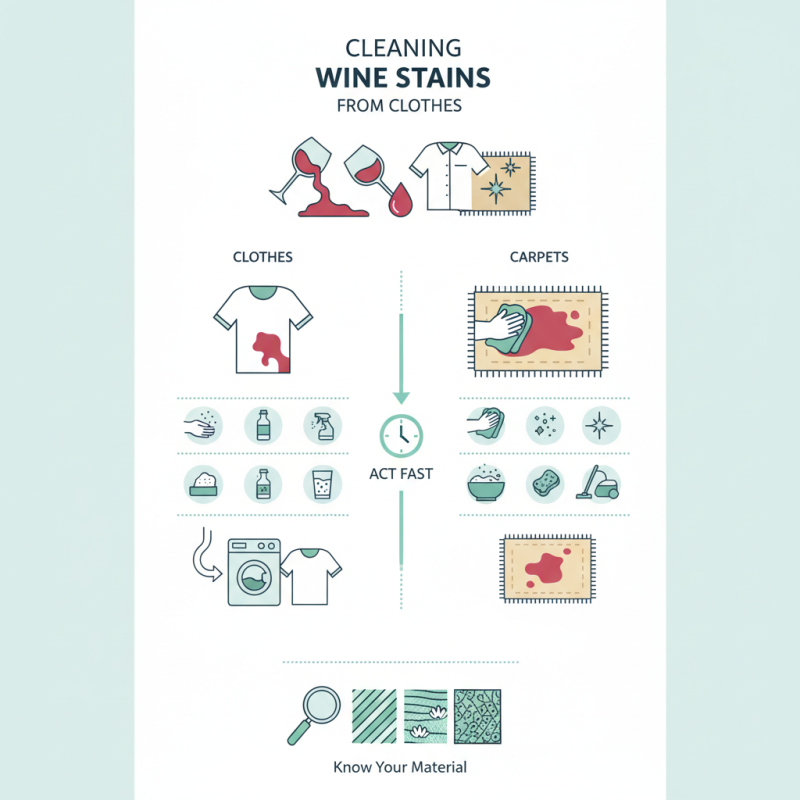
Cleaning wine from fabric requires the right approach. Different materials react differently to cleaning methods. For example, natural fabrics may absorb stains more easily than synthetic ones. Each situation demands a tailored strategy. You might need some basic supplies: salt, white vinegar, or even club soda. Simple items can become your best friends in this cleanup effort.
Sometimes, despite your best efforts, a stain lingers. This can be frustrating. It’s a reminder of that wonderful moment turned sour. Learning to clean wine stains is not just about removing them; it’s about understanding the materials around you. Reflect on what works best on specific fabrics, as this knowledge can save you from future mishaps.
Understanding the Nature of Wine Stains on Fabrics and Carpets
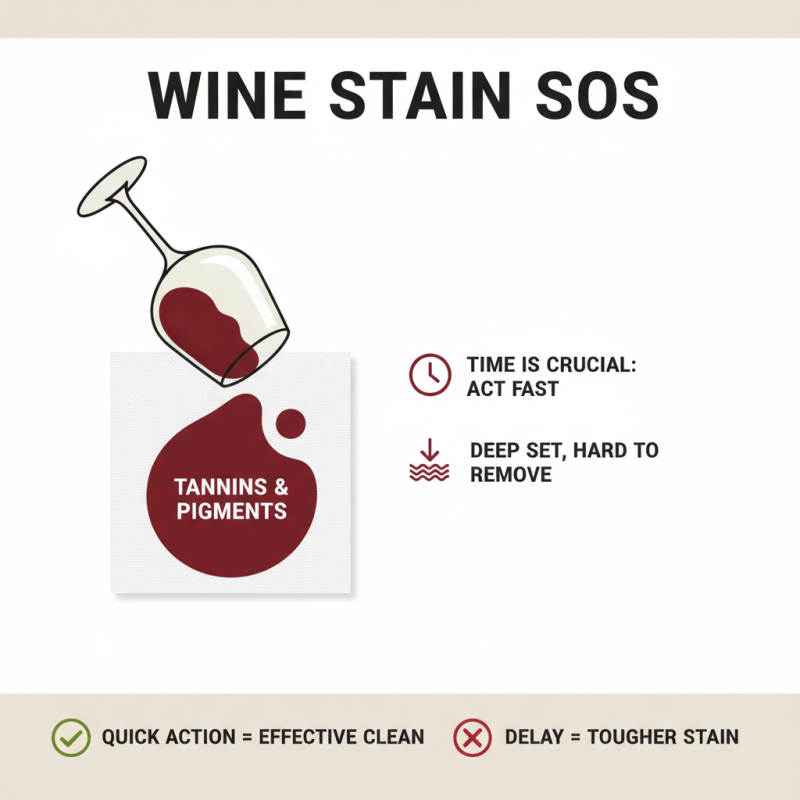
Wine stains can be notoriously stubborn. Understanding their nature helps in tackling them effectively. Red wine contains tannins and pigments. These components make the stains deep and difficult to remove. The longer the wine sits, the harder it is to clean. This is why acting quickly is essential.
Here are some practical tips for dealing with wine stains: Blot the area gently using a clean cloth. Do not rub; rubbing can worsen the stain. Use cold water to rinse the fabric or carpet. It helps in lifting the stain. If you're at home, sprinkle salt or baking soda on the stain. These absorbent materials work wonders.
Remember, not every method suits every fabric type. Always test a small area first. Sometimes, stains may fade but not disappear completely. It can be frustrating, and it's important to reflect on your cleaning choices. Patience plays a key role in this process.
Immediate Actions to Take After a Wine Spill Occurs
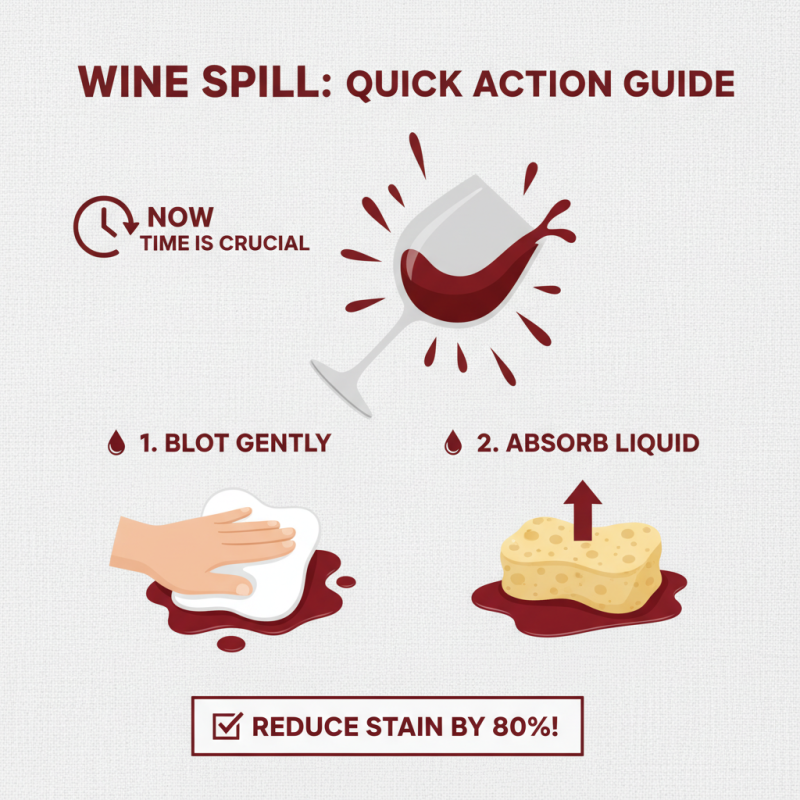
When a wine spill occurs, immediate action is crucial. According to recent studies, quick response can reduce stain visibility by up to 80%. As soon as you detect a spill, grab a clean cloth or paper towel. Blot the stain gently; do not rub, as this can worsen the situation. Aim to absorb as much liquid as possible. Remember, time is of the essence. The longer the wine sits, the deeper it embeds into the fabric.
Next, apply a mixture of cold water and dish soap to the stained area. This solution breaks down the pigments in the wine. Some experts recommend adding a splash of white vinegar. Vinegar can neutralize the stain's acidity. However, be cautious, as it may not work on all fabrics. After treatment, rinse the area with cool water and blot again. Repeat if necessary.
A 2020 survey indicated that nearly 30% of wine enthusiasts have experienced a clothing mishap due to spills. Many report feelings of frustration and embarrassment during social gatherings. The key takeaway: act swiftly and with care. Healing a wine stain is possible with the right initial steps.
Effective Home Remedies for Removing Wine Stains
Wine stains can be a nightmare on clothes and carpets. However, effective home remedies can help you tackle this problem. One common method is using salt. Sprinkle salt directly on the stain and let it absorb the wine. After a few minutes, gently blot it with a clean cloth. This helps draw out the liquid.
Baking soda is another great option. Mix it with water to form a paste. Apply this paste to the stained area and scrub gently. Let it sit for about 30 minutes before rinsing. It might not work perfectly every time, and you may need to repeat the process. Test the remedy on an inconspicuous area first to prevent any unexpected damage.
White vinegar is also useful. Mix it with dish soap and water, then apply it to the stain. Blot and rinse. The vinegar helps neutralize the wine's pigments. Yet, it may leave some scent behind. Sometimes, a second application is necessary. Each situation is unique, and results can vary. Be ready to adjust your approach as needed.
How to Clean Wine Stains from Clothes and Carpets? - Effective Home Remedies for Removing Wine Stains
| Method |
Ingredients |
Instructions |
Effectiveness |
| Salt and Soda Water |
Salt, Soda Water |
Pour soda water on the stain, then sprinkle salt over it. Let sit for 5-10 minutes. Blot with a clean cloth. |
High |
| White Vinegar and Dish Soap |
White Vinegar, Dish Soap, Water |
Mix 1 part white vinegar and 2 parts water with a few drops of dish soap. Blot the stain using this solution. |
Very High |
| Baking Soda Paste |
Baking Soda, Water |
Mix baking soda with a little water to form a paste. Apply to the stain and let it dry. Brush off and rinse. |
Moderate |
| Hydrogen Peroxide and Dish Soap |
Hydrogen Peroxide, Dish Soap |
Mix equal parts hydrogen peroxide and dish soap. Apply to the stain, let it sit for 30 minutes, then rinse. |
Very High |
| Club Soda |
Club Soda |
Pour club soda directly on the stain and blot with a clean cloth. Repeat as necessary. |
High |
Using Commercial Cleaning Products for Stubborn Wine Stains
Wine stains can be a nightmare, especially on clothes and carpets. When traditional methods fail, many turn to commercial cleaning products. These products often contain enzymes and surfactants that target the tannins in red wine. According to a survey by the Institute of Home Science, about 70% of homeowners report success using these specialized cleaners.
When selecting a commercial cleaner, look for those labeled for wine stains specifically. Some may come with added stain-fighting boosters. However, effectiveness can vary. A recent study found that only 55% of these products fully removed stains after one application. Factors like fabric type and stain age can affect results. It’s essential to test any cleaner on an inconspicuous area first.
Remember, even with commercial cleaners, vigilance is needed. Sometimes, stains can reappear after washing. If this happens, reconsider the cleaning method. Combining chemicals incorrectly can also yield poor outcomes. A careful approach can help minimize damage to fabrics while addressing stubborn wine stains effectively.
Wine Stain Removal Effectiveness
Preventive Measures to Avoid Future Wine Stain Incidents
Preventive measures are key to avoiding messy wine stains. A proactive approach can save you headaches in the long run. According to a survey by the National Wine Association, 30% of wine drinkers have experienced a stain incident. Here are some useful tips to minimize the risk.
Tip 1: Use coasters at gatherings. Many forget this simple tool, leading to pesky spills. A survey showed that 40% of wine spills occur when guests set glasses down carelessly.
Tip 2: Choose the right fabrics. Opt for stain-resistant materials for couches and tablecloths. Many homeowners neglect this, resulting in higher cleaning costs.
Tip 3: Be mindful around carpets. Area rugs can be particularly prone to stains. Consider using protective sprays designed for carpets. A study revealed that 50% of carpets that were treated with such sprays fared better against spills.
The key is to be aware and prepared. Each small action can contribute to a cleaner, stain-free environment.